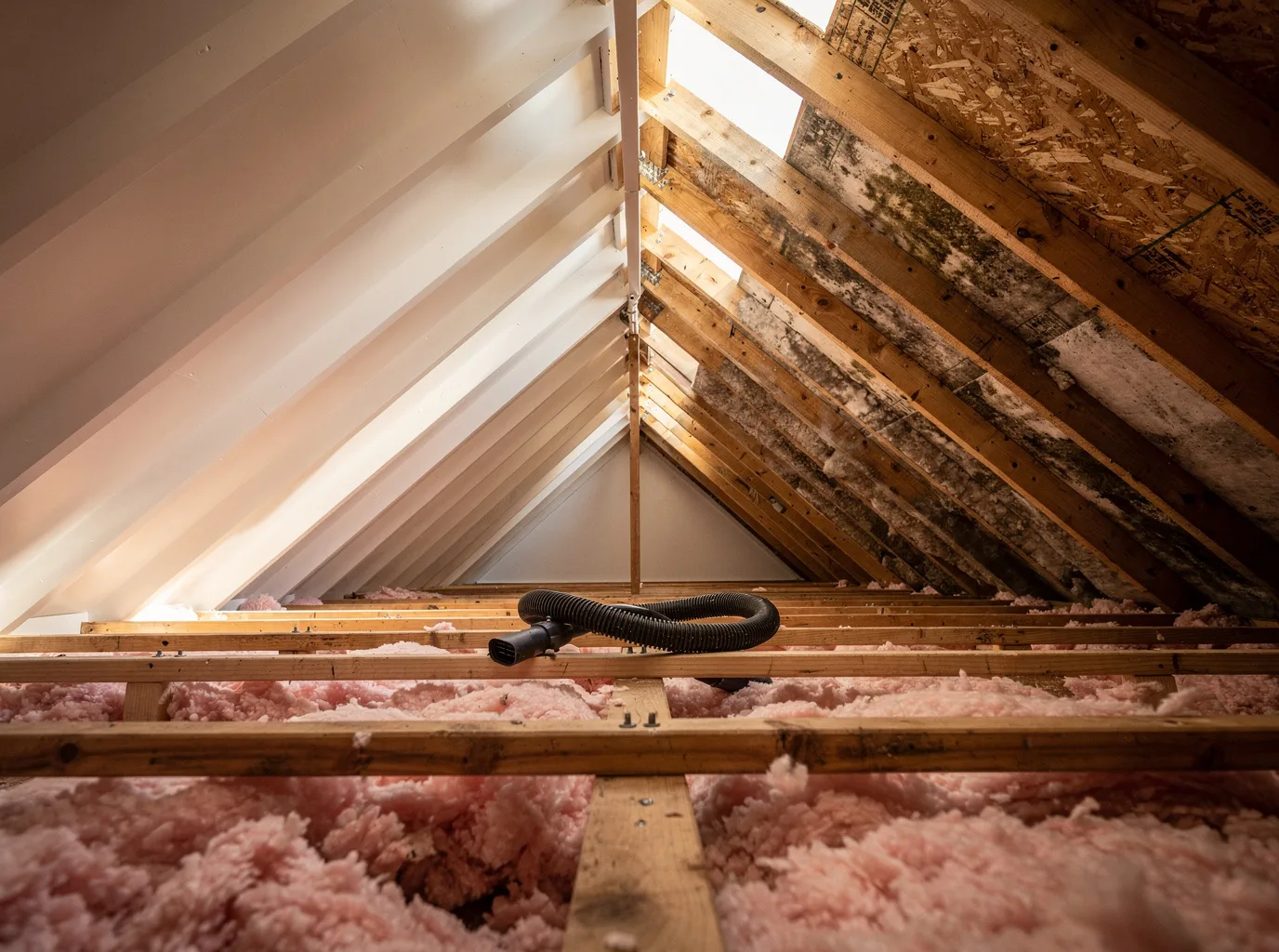
Drywall is gypsum wrapped in paper, and that paper is food for mold once it gets wet. Growth often starts on the back side of the board inside the wall, where you can't see it, and only shows on the room side as faint staining, bubbling paint, or a smell. Drywall mold removal in Overland Park, KS means opening the wall, taking out what's affected and cleaning the cavity behind it.
Can moldy drywall be cleaned?
Not really. A light surface spot on painted drywall in a dry room can be wiped and primed. But once mold has grown into the paper facing, or the board has been wet long enough to soften, it comes out. The rule of thumb crews use: cut out at least 12 inches past any visible growth or wet reading, and often to the next stud so the patch is easier to hang.
How the work goes
- Moisture meter and sometimes a thermal camera to map the wet area before cutting
- Plastic containment around the work area, with a HEPA air scrubber running
- Score and cut drywall in pieces, misting first to keep dust down
- Bag the debris inside the containment
- Pull wet insulation from the cavity
- HEPA vacuum, scrub and dry the studs and bottom plate
Studs with surface staining are usually sanded or wire brushed. A stud that's rotted or soft is a framing repair, not a cleaning job.
What's usually behind it
Mold inside a wall almost always has a water source: a supply line leak behind a sink or toilet, a drain line weeping at a fitting, a window flashing leak, condensation on an exterior wall in a cold room, or water wicking up from a damp slab in a basement. If the wall is in a finished basement, our basement mold page goes into the moisture side. Growth on overhead board is covered under ceiling mold removal.
Cost and rebuild
Cost depends on square footage of drywall removed, how many cavities need cleaning, whether insulation and trim come out, and access around cabinets or fixtures. The new drywall, tape, mud and paint are often a separate rebuild quote. Don't close the wall until the framing reads dry and the leak is fixed, and consider clearance testing first. For dark, slimy growth on the board, see black mold removal.
A note on furniture and belongings: before the crew cuts, move what you can out of the room, or at least away from the wall. What stays gets covered with plastic. Bookshelves and built-ins against the affected wall may need to come off, which the crew will flag during the walkthrough.
Electrical boxes and plumbing in the wall slow the cutting down a little, but they don't change the approach.
Call (984) 230-5534 and we will connect you with a local crew that handles mold in walls in Overland Park, KS.